Choosing the Right Route to Finance Transformation Capability: Interim, Permanent or Consultancy?
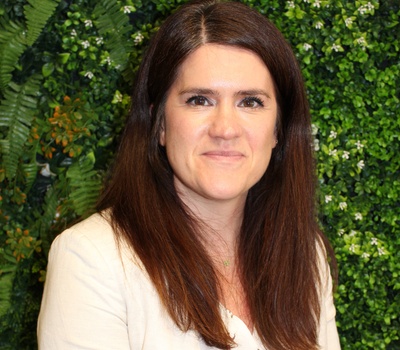
By Helen Firth, Associate Director, Transformation and Change, Stanton House
Over the last 12 months, I've noticed a change in the conversations I'm having with CFOs, Finance Directors and Transformation Leaders.
A few years ago, many discussions started with a role specification.
Today, they often start with a problem.
An ERP programme has stalled. A finance transformation has lost momentum. Reporting isn't delivering the insight the business expected. Internal teams are stretched. Leadership teams know something needs to change, but they're less certain about the best way to access the capability required to fix it.
What often begins as a request to recruit quickly becomes a wider discussion about programme maturity, delivery risk, operating models and organisational capability.
In my experience, that's a positive shift.
The most successful transformation programmes don't start by asking, "Who should we hire?"
They start by asking, "What capability do we need?"
Only once that question has been answered should leaders decide whether interim, permanent, consultancy support, or a combination of all three, is the most effective route forward.
Why Capability Decisions Are Becoming More Complex
Finance transformation has changed significantly.
Organisations are no longer simply implementing systems. They're redesigning finance operating models, modernising reporting, improving controls, introducing automation and exploring how AI can support better decision-making.
At the same time, expectations have increased.
Research from Deloitte shows that finance leaders continue to increase investment in technology while remaining highly focused on governance, productivity and measurable business outcomes.
That combination creates a challenge.
Businesses need specialist capability, but they don't always need it in the same way.
A programme in the early stages of defining its roadmap requires something very different from a programme entering deployment, optimisation or business-as-usual ownership.
Yet many organisations still default to permanent recruitment before fully understanding what stage their programme has reached.
The best outcomes tend to come from matching the capability model to the maturity of the programme rather than defaulting to a single hiring approach.
When an Interim Leader Is the Right Choice
I often describe interim leaders as a capability solution rather than a temporary resource.
Many organisations still associate interim hiring with covering absence or filling short-term gaps. The reality is very different.
Interim leaders are increasingly being used when programmes need immediate expertise, independent leadership or rapid mobilisation.
An interim solution is often most effective when:
· A programme has already started and needs stabilising
· Delivery momentum has been lost
· Specialist transformation expertise is required urgently
· Internal capability is stretched
· The long-term structure has not yet been defined
· Organisations need leadership while a permanent strategy is developed
One finance transformation client approached us looking to recruit a permanent transformation leader.
After a series of discovery conversations, it became clear the programme scope was still evolving. Stakeholders had different views on priorities; governance was unclear and success measures had not been agreed.
Rather than recruiting immediately, the organisation appointed an experienced interim transformation leader to stabilise the programme, align stakeholders and define the longer-term capability requirement.
Six months later, the business had far greater clarity around the permanent leadership role and ultimately made a stronger long-term appointment.
The recruitment process benefited because the programme itself had become more mature.
When Organisations Should Invest in a Permanent Hire
Permanent recruitment remains the right answer in many situations.
When transformation capability is required for the long term, ownership needs to sit within the organisation and programmes have a clearly defined roadmap, permanent hiring often creates the greatest value.
Permanent hires are particularly effective when:
· Programme scope is well understood
· Long-term capability is needed
· Internal ownership is critical
· Knowledge retention is a priority
· The organisation wants to build transformation capability internally
What I would caution against is using permanent recruitment to solve uncertainty.
A permanent hire should accelerate an established direction.
They should not be expected to define an entire transformation strategy from scratch while simultaneously delivering it.
Where Consultancy Support Adds the Most Value
Consultancy support is often misunderstood.
The strongest consultancy engagements are not necessarily those with the largest teams or longest contracts.
They're the engagements that provide targeted expertise where capability gaps genuinely exist.
Consultancy support is frequently most valuable when:
· The business problem has not yet been clearly defined
· Independent assessment is required
· Internal stakeholders need alignment
· Specialist expertise is required for a specific workstream
· Internal teams will ultimately retain ownership
One organisation we supported needed expertise around finance operating model design ahead of a wider ERP programme.
Rather than hiring permanent specialists for a short-term requirement, they engaged consultancy support to complete the assessment and roadmap phase.
Once the direction was agreed, ownership transferred back to the internal team, who retained responsibility for delivery.
The consultancy engagement solved a specific capability challenge without creating unnecessary long-term cost or complexity.
This approach reflects a broader trend highlighted by PwC, which emphasises the importance of understanding an organisation's starting point before determining the appropriate transformation model and capability requirements.
Can Different Capability Models Work Together?
Absolutely.
In fact, some of the most successful transformation programmes use a blended approach.
For example:
· An interim Programme Director stabilises delivery.
· Consultancy support helps shape the operating model.
· Permanent hires are brought in to build long-term capability.
Each component solves a different problem.
The objective is not choosing one model and rejecting the others.
The objective is creating the right combination of capability at the right point in the transformation journey.
This is increasingly important because transformation success depends as much on leadership, capability building and stakeholder alignment as it does on technology delivery.
Research from McKinsey has consistently highlighted the importance of capability building and leadership development in successful transformations. Organisations that invest in building the right capabilities significantly improve their chances of delivering sustainable outcomes.
How to Assess Programme Maturity Before Recruiting
Before deciding how to access capability, I believe every finance leader should answer a small number of fundamental questions.
· What problem are we trying to solve? Start with the business challenge rather than a job title.
· Is the capability gap clearly defined? If not, additional discovery may be required before recruitment begins.
· What does success look like in 12 months? The outcome should be agreed before the role is defined.
· Is this truly one role? Many transformation briefs combine programme leadership, ERP expertise, process redesign, data, reporting, automation and change management into a single requirement.
· How quickly is capability required? Urgency may point towards interim support.
· Do we need capability permanently? If not, a consultancy or interim solution may be more appropriate.
· Is knowledge transfer important? If so, consider how specialist expertise will be embedded into the organisation over time.
These questions often reveal far more about the right solution than a discussion about job titles or candidate profiles.
Common Mistakes Organisations Make
The same mistakes appear repeatedly across finance transformation programmes:
· Starting with recruitment before defining the problem
· Assuming permanent hiring is always the answer
· Expecting one person to solve multiple capability gaps
· Using consultants when leadership capability is actually needed
· Hiring interim support without a clearly defined objective
· Focusing on skills rather than outcomes
In nearly every case, the underlying issue isn't access to talent.
It's a lack of clarity around capability.
Final Thoughts
In my experience, the strongest finance transformation outcomes come from organisations that resist the temptation to treat recruitment as the default answer.
Instead, they step back and assess the maturity of the programme, the business challenge they are trying to solve and the capability gap preventing progress.
Only then do they decide whether interim, permanent, consultancy support or a blended solution is most appropriate.
That approach reduces risk, improves hiring decisions and ultimately increases the likelihood of successful transformation delivery.
That's exactly why we've developed the Finance Transformation Capability Diagnostic Workbook.
Rather than starting with a vacancy, it helps finance leaders assess programme maturity, define capability gaps and determine the most effective route to capability before launching a search.
If you're planning a finance transformation programme, ERP implementation or operating model change initiative, I'd encourage you to start there.
The right transformation outcome rarely begins with a job title.
It begins with a clear understanding of the capability required to solve the problem.
If you would like a copy of our workbook, please get in touch.